Magnet fishing means using a retrieval magnet on a rope to recover magnetic objects from water. You are looking for iron and steel objects, not catching fish. A useful first trip starts with permission and manageable equipment.
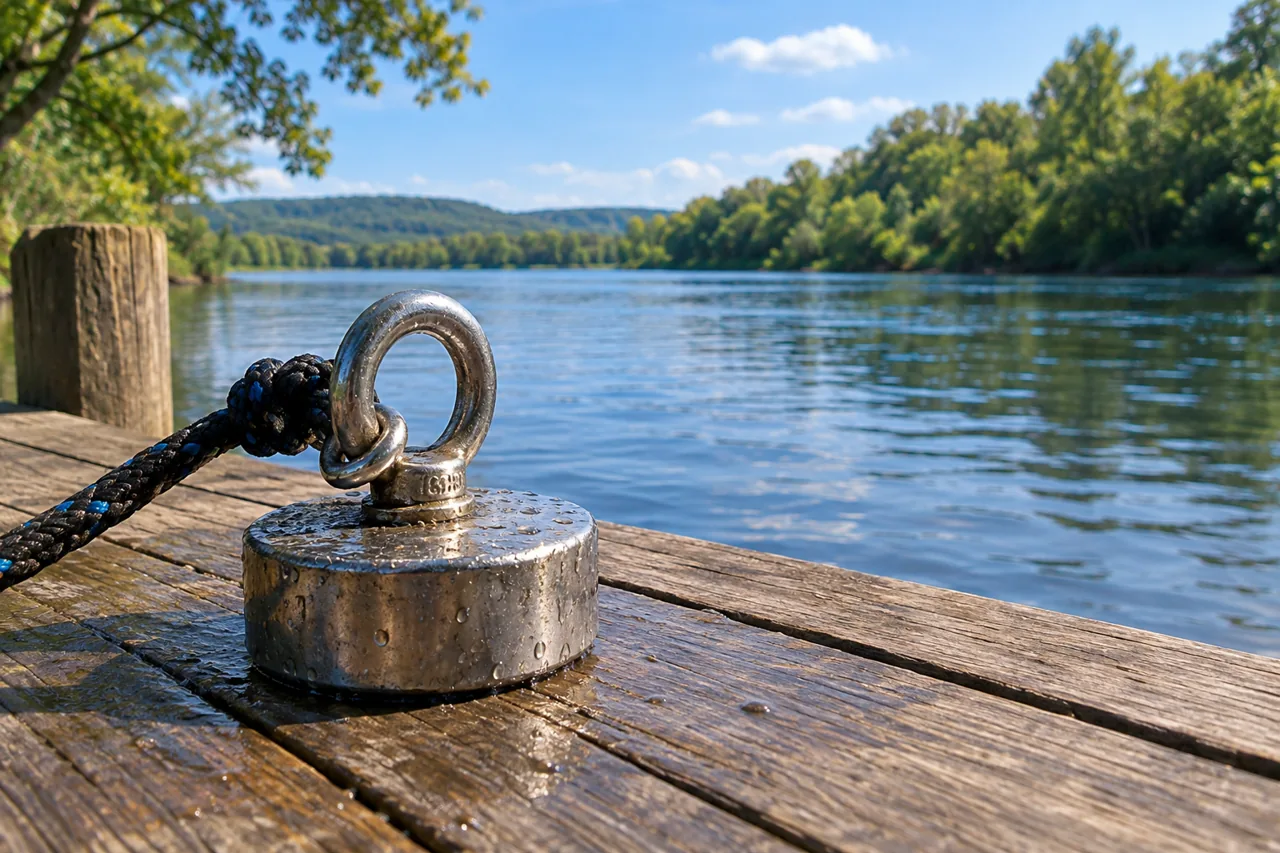
What magnet fishing actually pulls from water
The appeal is the uncertainty: you cannot see exactly what is on the bottom. A small tap might be a nail, a washer or part of a larger object. Most finds are ordinary metal. That is still an interesting way to learn about a place, provided you have permission to be there and remove material.
A fishing magnet attracts ferromagnetic material, including iron and many steels. Gold, copper and aluminium do not behave the same way. A gold ring does not leap onto a fishing magnet just because it is metal.
What to pack for a first magnet fishing trip
Start with one retrieval magnet you can control, compatible rope, suitable gloves, a sturdy container and a plan for taking scrap away. Follow the maker’s instructions for the eye bolt, connection and any threadlocker. Inspect the rope before each outing.
You do not need separate magnets for dipping and dragging. A single-sided magnet is commonly used for vertical dipping, while a 360° design can dip or drag. A double-sided magnet can also be used in either way, depending on its attachment point. Choose by how the working surfaces meet the bottom, not a rigid rule about the only correct type.
How to plan a first magnet fishing trip
- Identify the waterway manager and landowner. Ask whether magnet fishing and removing objects are allowed at the exact spot.
- Check stable footing, an unobstructed exit and room away from passers-by. Avoid navigation structures, floodwater and protected sites.
- Set out the rope so it cannot wrap around your body or trip someone. Never tie it to yourself.
- Start with a controlled drop in an authorised, clear area. Work gently; an abrupt release can send the magnet back toward you.
- Stop when a load is beyond safe hand control. Leave suspicious objects alone and contact the appropriate authorities.
- Take ordinary scrap away through a lawful disposal route. A pile of rusty metal on the bank is not a completed cleanup.
What a good first magnet fishing trip looks like
Coming home with all your equipment and leaving the bank clear is a sensible goal. You do not need a heavy find, an expensive magnet or a long throw. Keep brief notes about permissions, access and the equipment you used. They will be more useful next time than a guess about what might be hiding underwater.
What a first hour of magnet fishing might look like
Keep the first outing small. At an authorised location, spend a few minutes looking at the bank before unpacking. Decide where you will stand, where the rope will lie and where ordinary scrap will go. If you cannot arrange those three things without blocking a path or leaning over the water, choose a different spot.
Lower the magnet within easy reach and bring it back slowly. A short, controlled search helps you learn how the equipment feels. You may feel the magnet scrape over a surface or catch briefly on a small piece of iron. Neither sensation tells you the size or identity of an object. Stop when you cannot retrieve it with safe hand control.
Leave time to pack away. Count the equipment, inspect the rope and check the ground for anything sharp. The hobby becomes more enjoyable when the routine is comfortable, even on a day when you find very little.
Magnet fishing or metal detecting?
A magnet must make useful contact with a material it attracts. A metal detector senses a response from a target; it does not lift it. That distinction matters when your aim is to recover jewellery. Pure gold will not attach to a fishing magnet, although a mixed object may contain steel parts.
For the equipment list, follow our magnet fishing kit guide. For jewellery and other nonmagnetic targets, read how metal detectors respond to gold. Both activities require permission for the place and the type of recovery.
Common questions
How do I start magnet fishing as a beginner?
Confirm permission for the exact location, choose a manageable retrieval magnet and compatible rope, and practise controlled drops from firm footing. Bring gloves, a container and a lawful disposal plan. Start with a small search area rather than a long throw.
Sources & further reading
Community questions inform the topics. Official sources support rules; manufacturer information is not a hands-on test.
- Indiana DNR: magnet fishing on state propertiesOfficial authority
- Magnetar: magnet buying guideManufacturer
- Reddit r/magnetfishing: beginner questions and equipment discussionCommunity questions
- Reddit: community correction about tying a rope to your bodyCommunity caution