The main risks are falling into water, trapping fingers, a magnet recoiling under tension, sharp scrap and dangerous finds. Permission, stable footing and a clear stopping point matter more than recovering an object.
How to avoid injuries from a tensioned magnet rope
Do not tie the rope to your body, wrap it around your hand or stand where a sudden release could strike you. Keep bystanders away from the rope and magnet. A load held in mud can release abruptly even when it first feels solid.
Use controlled movement. Stop if a retrieval needs excessive force or unsafe positioning. Do not attach a vehicle or winch to force a recovery, and do not enter water to save a magnet.
How to assess the water and bank before magnet fishing
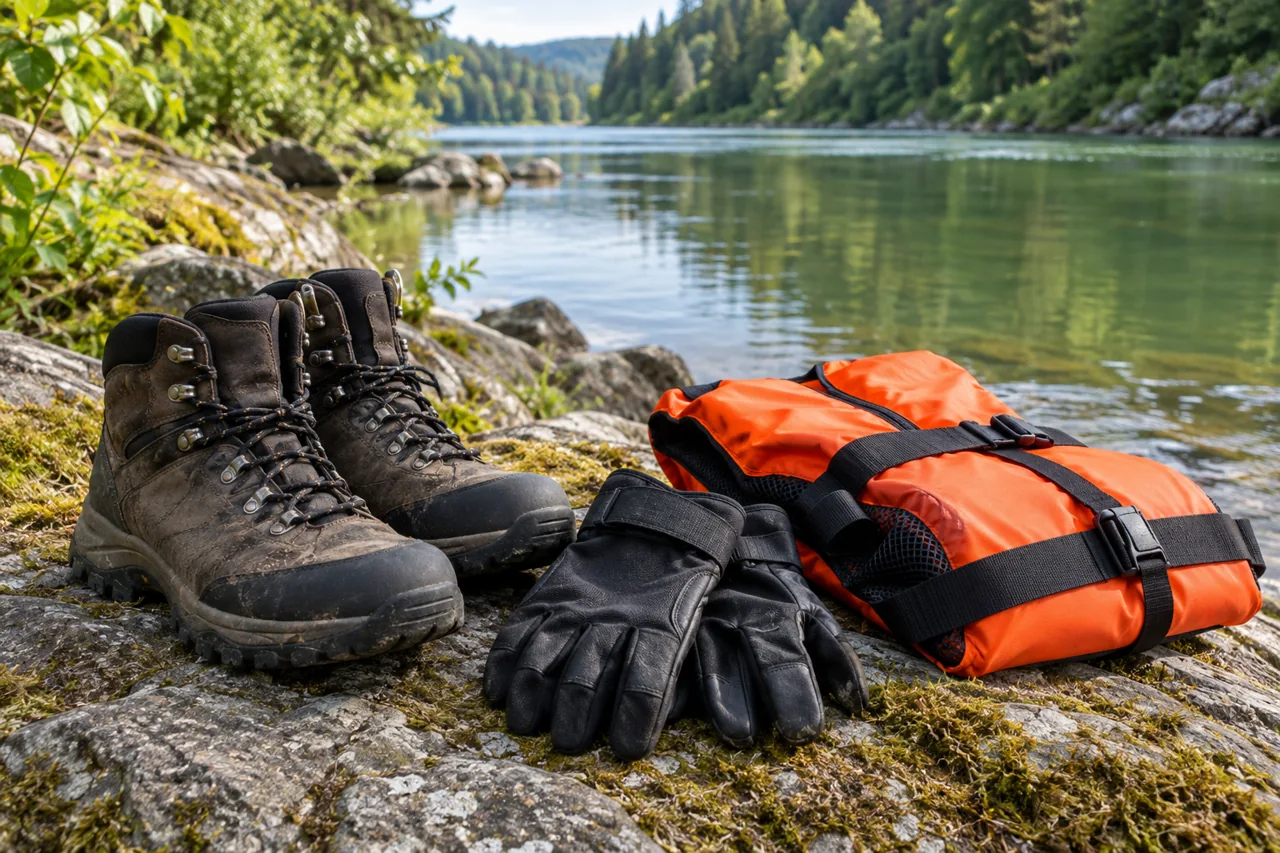
Look for firm, level footing and a clear route away from the edge. Avoid slippery banks, fast water, rising water levels and places used for navigation. Wear suitable footwear and flotation equipment for the setting. Gloves help with handling, but they do not prevent a fall or make a heavy load manageable.
Which magnet fishing finds should be left alone?
If an object could be a firearm, ammunition or an explosive, stop handling it. Do not open, clean, strike, transport or try to make it safe. Move away, keep other people clear and contact local emergency services or police from a safe location. Follow their directions.
For unknown chemical containers, batteries or sealed objects, avoid opening or dismantling them. Ask the responsible local service about collection. Do not put dangerous material into ordinary recycling.
How to dispose of magnet fishing scrap
Take ordinary scrap to an appropriate disposal route and leave pathways clear. Check the site’s instructions for reporting finds. Photographing an object does not establish ownership, historic value or permission to keep it.
Strong magnets can affect sensitive equipment. Follow the manufacturer’s separation guidance and, if you use an implanted medical device, the device maker’s advice before handling a retrieval magnet.
Sources & further reading
Community questions inform the topics. Official sources support rules; manufacturer information is not a hands-on test.
- Canal & River Trust: water safety and magnet fishingOfficial waterway manager
- Indiana DNR: magnet fishing on state propertiesOfficial authority
- Reddit r/magnetfishing: updated FAQ discussion (21 July 2026)Community questions
- Reddit: community correction about tying a rope to your bodyCommunity caution
- Brute Magnetics: equipment FAQManufacturer