Iron and steel scrap are realistic magnet fishing finds. Bicycles, tools and keys may contain magnetic parts; coins and jewellery depend on their materials. Never treat an unknown object as harmless or assume recovery gives you ownership.
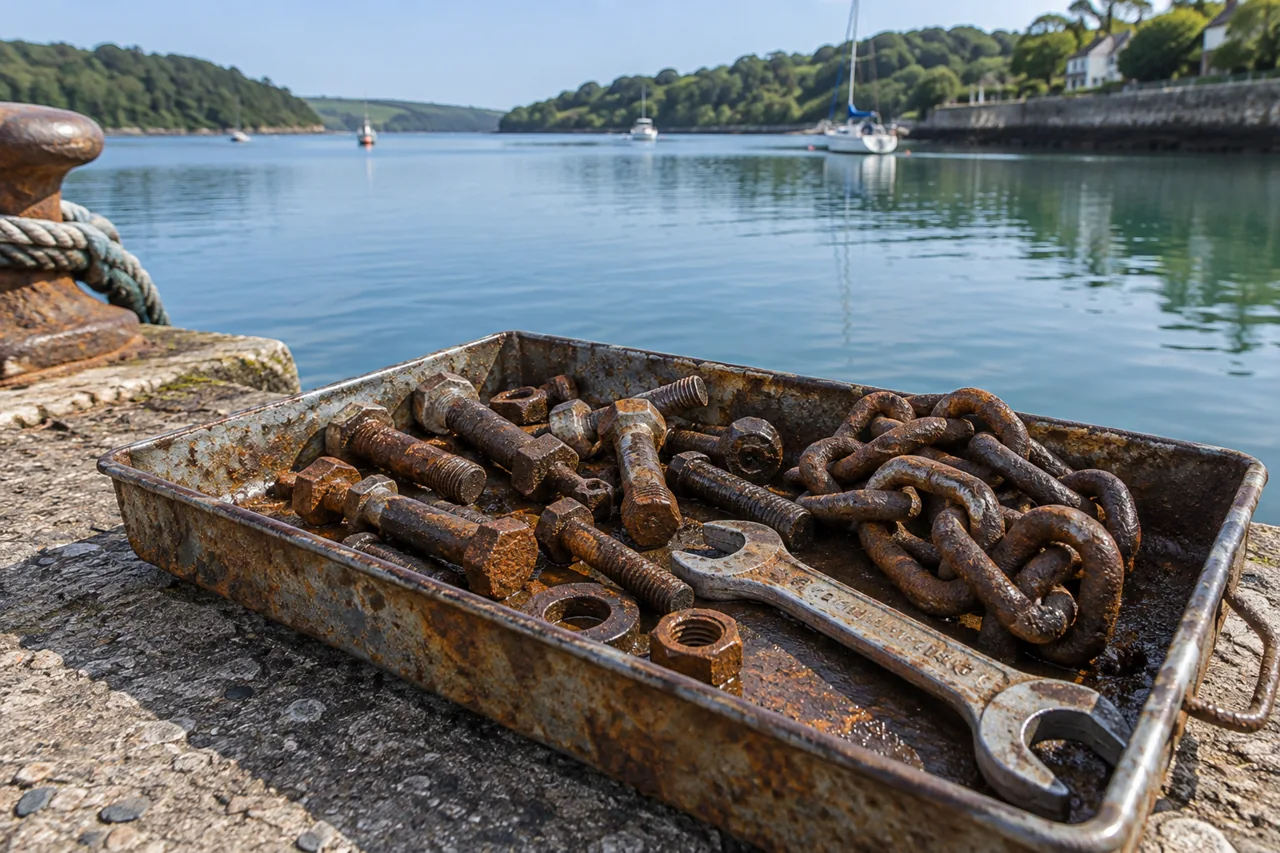
Why fishing magnets catch tools, bolts and chain
Many ordinary tools and fasteners contain magnetic steel. Corrosion and mud can disguise sharp edges. Handle only clearly ordinary scrap using suitable protection, then arrange lawful recycling or disposal. A tool that looks intact may be weakened or contaminated.
What makes large steel finds hard to recover
A steel frame can attract a magnet, but the whole object may be heavy, embedded or tangled. Aluminium parts may not attract. Do not judge whether a lift is safe from the first piece that sticks. Stop when the load exceeds safe hand control and contact the manager about removal.
Will fishing magnets catch keys, locks or coins?
Some keys and coins are steel; others contain copper alloys or other non-ferromagnetic materials. A coin-shaped object is not proof of a valuable find. Its magnetic response does not establish age, authenticity or ownership.
Keys, identifying tags and recently lost property may have an owner. Follow the local lost-property process rather than posting identifying details online.
What to do with a sealed container found by magnet fishing
A safe can have a steel exterior without being safe to lift or open. It may be connected with a crime or contain hazardous material. Avoid opening unknown containers; contact the site manager or police as appropriate.
Firearms, ammunition and possible explosives
Do not clean, dismantle or transport a suspicious object. Move away, keep other people clear and contact police or emergency services from a safe location. Follow their instructions. Never attempt to determine whether ammunition is live yourself.
How to handle a possible historical find
Context matters. An object can be protected even if it appears to be scrap. Record the location without disturbing it further and ask the appropriate heritage authority about reporting requirements. This library explains categories; it does not invent recovery stories, rarity scores or valuations.
How to record a magnet fishing find without guessing its history
For ordinary, safe-to-handle finds, record the date, authorised search area, visible markings and material. A ruler beside an object can help show its size in a photograph. Do not describe an item as historic, valuable or stolen based only on rust or an unfamiliar shape.
If an object could be dangerous, leave it alone and follow the reporting guidance. Do not clean a suspected weapon to reveal a serial number. If it may have heritage value, ask the responsible authority before cleaning or moving it further. Preserving information can matter more than getting a better photograph.
For ordinary scrap, check the disposal route before loading your vehicle. Separate sharp edges from equipment and passengers. Finding an object does not settle who owns it or whether you may keep it.
Sources & further reading
Community questions inform the topics. Official sources support rules; manufacturer information is not a hands-on test.
- Indiana DNR: magnet fishing on state propertiesOfficial authority
- University of South Carolina SCIAA: Hobby License FAQState underwater archaeology authority
- Canal & River Trust: water safety and magnet fishingOfficial waterway manager